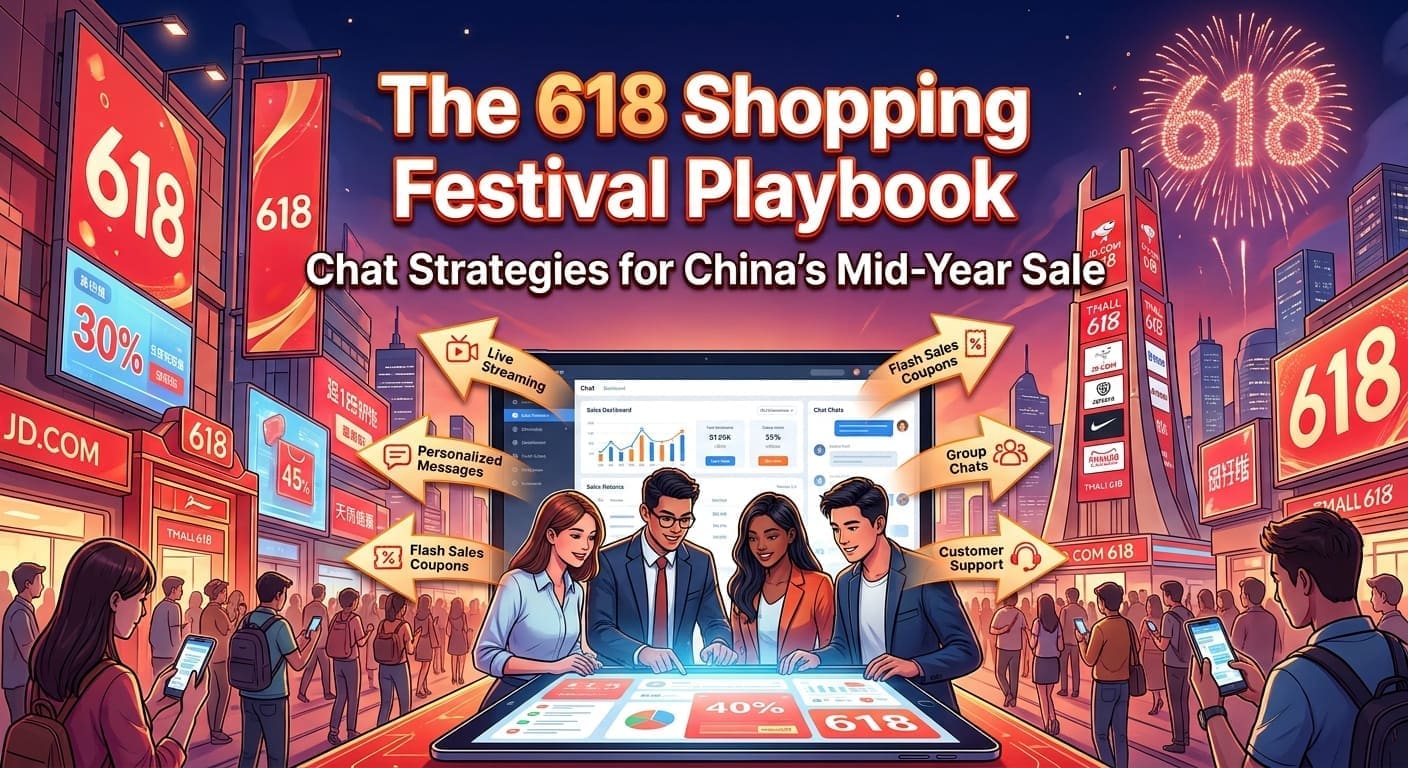
618 has grown from a JD.com anniversary sale into one of the two anchor shopping events on the Chinese retail calendar, and for cross-border and domestic brands alike, the chat channel now carries a measurable share of both pre-sale intent and sale-day conversion. Treating it as “just another campaign” leaves volume — and revenue — on the table.
The Three-Week Arc
| Phase | Timing | Dominant chat intent | What to build |
|---|---|---|---|
| Pre-sale | Days -14 to -1 | Price-history skepticism, wishlist alerts | Proactive “notify me at 618 price” triggers, verified price-history citations |
| Sale-day surge | Day 1, midnight + lunchtime | Coupon stacking, stock checks | Bot-first FAQ triage, real-time coupon-rule application |
| Logistics window | Days 2-10 | Shipping status, delay anxiety | Proactive shipping updates, courier-partner data feed |
| Post-sale | Days 11-21 | Returns, price-protection complaints | Pre-written return flow, consistent price-protection policy |
Pre-Sale: Education, Not Just Hype
The two weeks before 618 are when serious shoppers do their research: comparing prices against historical lows, checking whether a product will actually be discounted or just relisted at a higher “before” price, and pre-adding items to cart. Chinese shoppers, more than most markets, are accustomed to inflated “original prices” that make a discount look larger than it is, and a bot that can proactively cite verified price history — “this item’s lowest price in the past 90 days was X, and the 618 price will match that” — earns disproportionate trust compared to a generic promotional message.
Sale-Day: Absorb the Spike Without a Queue
618’s traffic pattern is famously front-loaded: a surge at midnight when the sale opens, a second surge around lunchtime, and a long tail through the following two weeks of secondary promotions. Coupon logic deserves particular attention because 618’s promotional structure is genuinely complicated — cross-store vouchers, category-specific coupons, member-tier discounts, and time-limited flash coupons can all stack in ways that are hard for a customer to calculate manually.
The Middle Stretch: Logistics Anxiety
Between the midnight opening surge and the post-sale return wave sits a middle period, roughly days three through ten, dominated by logistics questions — where’s my order, will it arrive before a specific date, why hasn’t it shipped yet. Warehouse and courier partners are under their own peak-season strain during this window, so proactive, accurate shipping-status updates matter more here than at almost any other time of year.
Post-Sale: The Second Wave Nobody Plans For
The week after 618 brings its own volume spike — logistics questions, return requests for impulse buys, and price-protection complaints from shoppers who saw the item cheaper the day after they bought it. A pre-written, proactive “your order is on the way” flow with real-time logistics status heads off a large share of that second wave before it becomes a ticket, and a clear, consistently applied price-protection policy resolves the “it’s cheaper now” complaints quickly and predictably.
Staffing for the Shape of the Curve, Not Just the Peak
The single biggest planning mistake we see is staffing only for the midnight and lunchtime sale-day peaks and assuming volume tapers off cleanly afterward. In practice, total chat volume across the three-week window is often flatter than the dramatic sale-day spike suggests, because the logistics and post-sale phases generate steady, sustained volume of their own — just spread across more days rather than concentrated into a few dramatic hours. Brands that plan human staffing purely around the visible spike, and let automation coverage lapse once the sale-day rush passes, often see their post-sale CSAT dip even though sale-day itself went smoothly.
Cross-Border Brands Face an Extra Layer
For brands selling into China from abroad, 618 adds a further wrinkle: customs and bonded-warehouse questions spike alongside the usual sale traffic, since shoppers unfamiliar with cross-border logistics want reassurance about import duties, delivery timelines from overseas, and whether a promotional price already accounts for any additional fees at delivery. Pre-building clear, jurisdiction-specific answers to these questions — rather than a generic domestic shipping FAQ — measurably reduces the abandoned-cart rate among first-time cross-border buyers specifically, who are otherwise the most likely segment to hesitate at checkout over an unclear total cost.