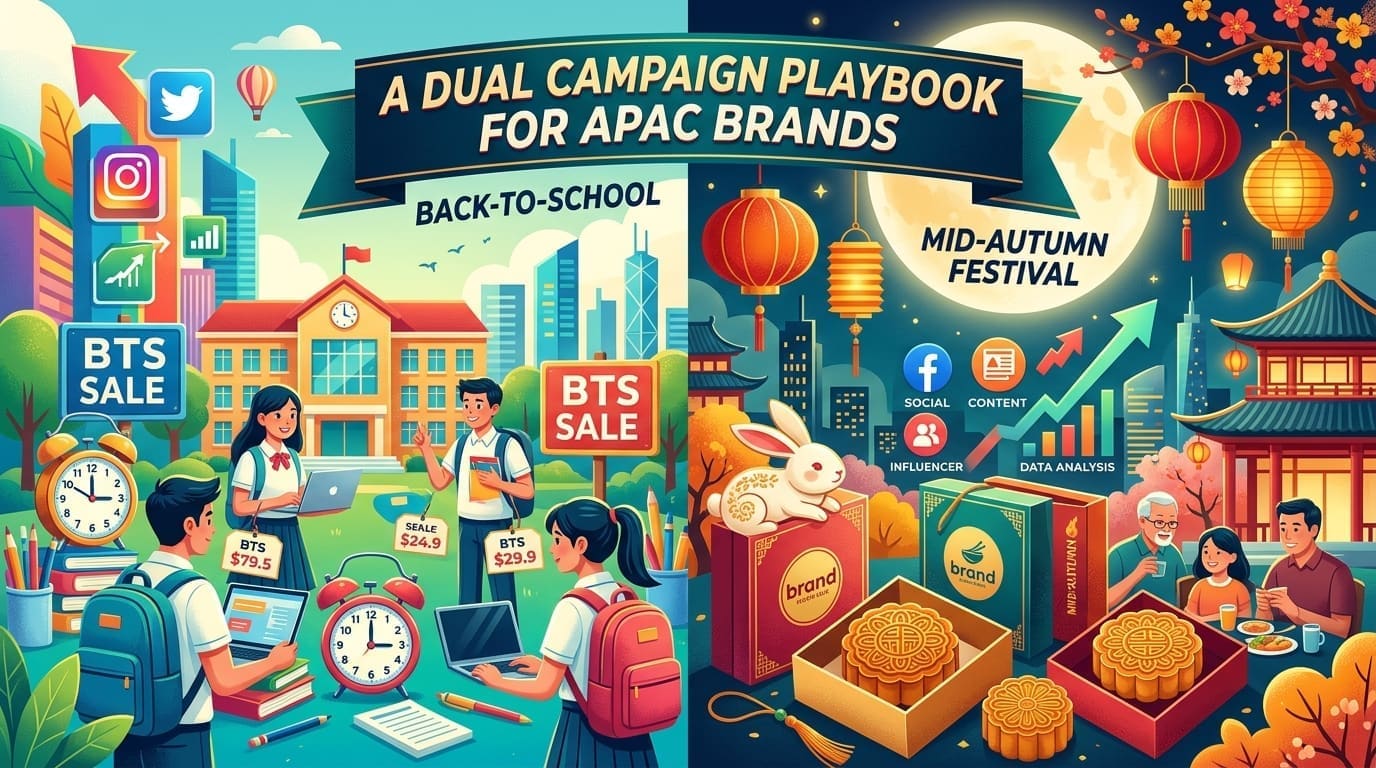
Late August into September brings two shopping occasions with almost nothing in common except timing: back-to-school demand, driven by practical, deadline-bound purchases, and Mid-Autumn Festival gifting, driven by relationship and tradition. Brands operating across APAC markets often run both simultaneously, and treating them as one undifferentiated “fall campaign” underserves both.
Two Audiences, Two Intents
| Back-to-school shopper | Mid-Autumn gift shopper | |
|---|---|---|
| Purchase stage | Usually purchase-ready | Often earlier in consideration |
| Key questions | Stock, bundle deals, delivery before deadline | Packaging, gift-appropriateness, gift sets |
| Priority | Speed, certainty | Reassurance, guidance |
| Sensitivity to late delivery | Moderate | High (social/relationship stakes) |
Routing by Signal, Not by Date
Rather than switching a single chat flow’s messaging based on the calendar alone, route based on actual signal in the conversation — mentions of gifting, packaging, or a recipient other than the shopper trigger the Mid-Autumn flow regardless of exact date, while stock and deadline-driven language triggers the back-to-school flow. Both can run concurrently without stepping on each other.
Gift-Specific Chat Features Matter More Than They Seem
For the Mid-Autumn side specifically, simple features — a gift note field surfaced proactively in chat, a clear answer about gift-wrapping availability, reassurance about delivery timing before the festival date — resolve a disproportionate share of gift-shopper hesitation compared to the effort required to build them. A late-arriving gift is a much more visible and socially awkward failure than a late-arriving personal purchase, and shoppers are noticeably more anxious about the timeline question for gifts specifically.
Coordinating With Inventory and Logistics
Both occasions create their own demand spikes on specific SKUs — school supplies and electronics for back-to-school, mooncakes and gift sets for Mid-Autumn — and a chat flow that confidently promises delivery before a festival date needs to be backed by real, current logistics data rather than a generic shipping estimate, since an inaccurate promise on a gift-timing question does more relationship damage than the same inaccuracy would on a routine purchase.
Route by Intent, Not by the Calendar
Overlapping seasonal occasions reward brands that route by customer intent rather than by calendar date. Build for the actual question being asked, not the season the calendar says it is — a shopper who happens to be buying both a gift and a school supply in the same conversation can be served by both flows in sequence rather than forcing a single generic response to cover an ambiguous mixed intent.
The Same Pattern Recurs at Every Overlapping Occasion
This isn’t unique to back-to-school and Mid-Autumn — any calendar that clusters two structurally different shopping occasions close together (a regional holiday overlapping a retail sale event, for instance) rewards the same intent-first routing approach rather than a date-first one. Brands operating across multiple APAC markets with their own distinct local calendars find it worth building this routing logic once, as a reusable pattern keyed on conversation signal, rather than rebuilding a bespoke flow for every new overlapping occasion that comes up through the year.