情感路由真正解决的问题
大多数客服团队将情感分析用作报告工具:了解客户感受、追踪 CSAT 趋势、标记需要审查的异常对话。这很有价值,但属于事后分析。
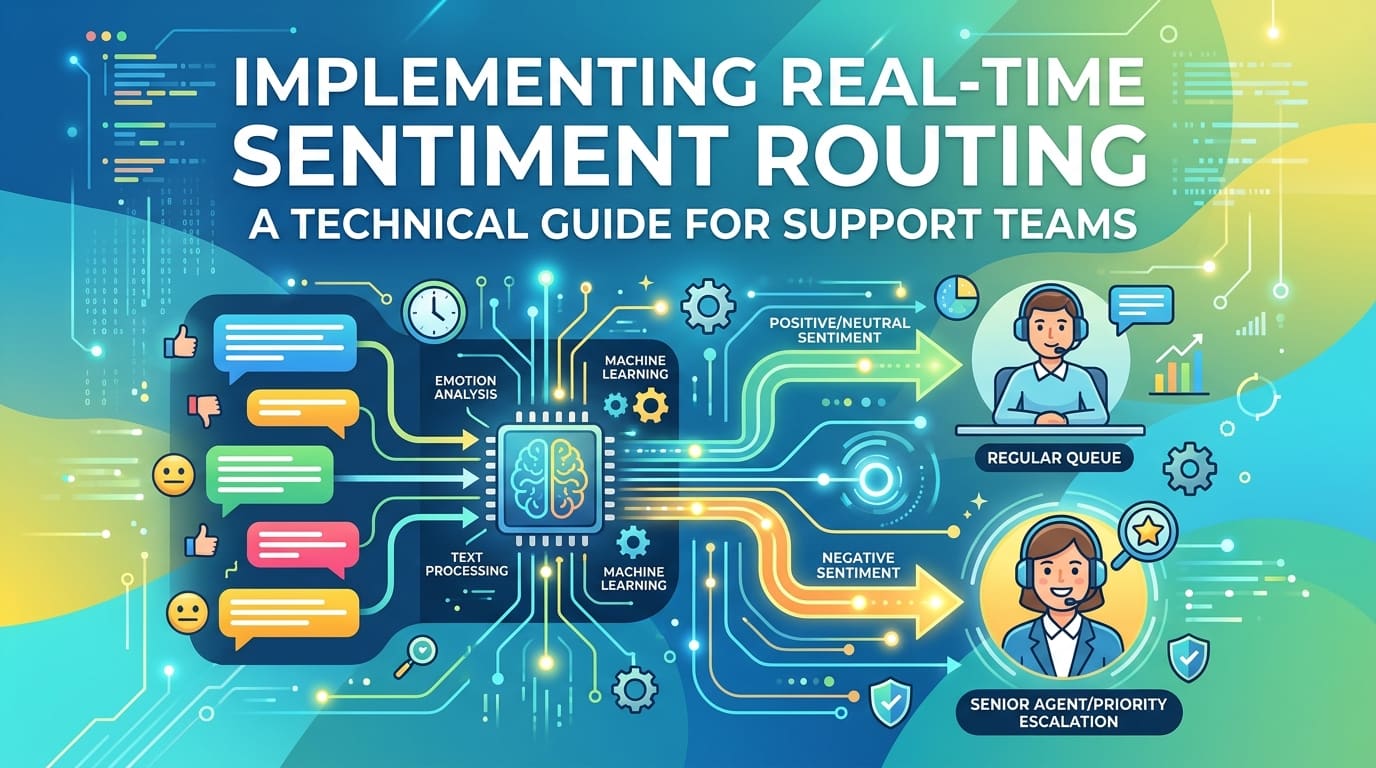
实时情感路由利用相同的信号,在对话进行中做出路由决策——在客户有机会流失、发布负面评价或向管理层升级之前介入。
本指南涵盖完整实施流程:模型选择、路由逻辑、集成模式及调优注意事项。
架构概览
Incoming Message
      ↓
Sentiment Model (inference < 50ms)
      ↓
Sentiment Score + Intensity + Trend
      ↓
Routing Decision Engine
      ↓
  ├── Negative + High Intensity + Escalating → Senior Agent Queue
  ├── Negative + Moderate + Stable → Standard Queue (priority bump)
  ├── Neutral/Positive → AI Handling or Standard Queue
  └── Repeated Negative across sessions → Retention Queue
      ↓
Assignment + Context Package
核心架构原则:情感是路由决策的输入,而非决策本身。在路由时,需将情感信号与对话历史、客户层级、问题类别及当前队列深度相结合。
第一步:模型选择
选项
基于词典的模型(VADER、SentiWordNet):
- 速度快(< 1ms)
- 无需训练数据
- 对特定领域语言处理效果差(“this is broken” → 评分模糊不清)
- 适用场景:简单的正面/负面/中性分类
经过微调的 Transformer 模型(DistilBERT、RoBERTa,在客服数据上微调):
- CPU 推理耗时 10-50ms,GPU 下低于 5ms
- 需要 5,000+ 条标注样本
- 能良好处理特定领域语言
- 支持多分类输出(愤怒、沮丧、困惑、满意、中性)
LLM 即分类器(GPT-4o-mini、Claude Haiku,通过 API 调用):
- 延迟 100-300ms
- 无需训练数据
- 对细微文本的识别准确率高
- 成本:每次对话约 $0.002
- 适用场景:低流量或高价值路由
我们的建议:实时路由使用经过微调的 DistilBERT(延迟 < 10ms,对客服语言识别准确),在低置信度输出时以 LLM 即分类器作为兜底方案。
需要训练的标签
标准的正面/负面/中性分类远远不够。需训练以下标签:
- 沮丧(frustrated) — 重复投诉、表达时间浪费
- 愤怒(angry) — 粗口、明确表示要取消或升级投诉
- 困惑(confused) — 反复提问、出现"我不理解"等表达模式
- 满意(satisfied) — 表示感谢、确认问题已解决
- 紧急(urgent) — 时间压力语言,如"今天必须解决"、“这阻塞了我的工作”
多标签对大多数消息是正确的做法(客户可以同时处于沮丧和紧急状态)。
第二步:实时推理集成
集成模式
对于基于 webhook 的客服平台:
import httpx
from fastapi import FastAPI, Request

app = FastAPI()
sentiment_client = httpx.AsyncClient(base_url="http://sentiment-service:8000")

@app.post("/webhook/message")
async def handle_message(request: Request):
    payload = await request.json()
    message_text = payload["message"]["body"]
    conversation_id = payload["conversation"]["id"]

    # Async sentiment inference — don't block the message receipt
    sentiment_task = asyncio.create_task(
        sentiment_client.post("/infer", json={"text": message_text})
    )

    # Enqueue message immediately
    await enqueue_message(payload)

    # Await sentiment result (target: < 50ms total)
    sentiment_response = await sentiment_task
    sentiment = sentiment_response.json()

    # Update routing with sentiment
    await update_routing_context(conversation_id, sentiment)
    await maybe_reroute(conversation_id, sentiment)

    return {"status": "accepted"}
关键设计决策:立即将消息入队,不要阻塞在情感推理上。推理完成后再更新路由上下文。若情感推理失败,则回退至标准路由。
推理服务(DistilBERT)
from transformers import pipeline
from fastapi import FastAPI

app = FastAPI()
classifier = pipeline(
    "text-classification",
    model="./models/support-sentiment-distilbert",
    return_all_scores=True,
    device=0  # GPU; use -1 for CPU
)

@app.post("/infer")
async def infer(body: dict):
    scores = classifier(body["text"], truncation=True, max_length=512)[0]
    labels = {s["label"]: round(s["score"], 3) for s in scores}
    primary = max(scores, key=lambda x: x["score"])
    return {
        "primary": primary["label"],
        "confidence": primary["score"],
        "scores": labels,
        "high_intensity": labels.get("angry", 0) > 0.6 or labels.get("frustrated", 0) > 0.7
    }
第三步:路由决策逻辑
async def maybe_reroute(conversation_id: str, sentiment: dict):
    conv = await get_conversation_context(conversation_id)
    current_queue = conv["queue"]
    customer_tier = conv["customer"]["tier"]
    sentiment_history = conv["sentiment_history"]  # list of last N sentiments

    # Escalation trigger: current message angry/frustrated AND intensity rising
    trend = calculate_trend(sentiment_history + [sentiment])
    if (
        sentiment["primary"] in ("angry", "frustrated")
        and sentiment["high_intensity"]
        and trend == "escalating"
        and current_queue != "senior"
    ):
        await reroute(conversation_id, "senior", reason="sentiment_escalation")
        await notify_agent(conv["assigned_agent_id"], "Conversation rerouted to senior queue — customer sentiment escalating")
        return

    # Priority bump: frustrated but not at escalation threshold
    if (
        sentiment["primary"] == "frustrated"
        and not sentiment["high_intensity"]
        and current_queue == "standard"
    ):
        await bump_priority(conversation_id, delta=2)
        return

    # Retention queue: Enterprise customer with repeated negative sessions
    if customer_tier == "enterprise":
        recent_sessions = await get_recent_session_sentiments(conv["customer"]["id"], days=30)
        negative_sessions = [s for s in recent_sessions if s["primary"] in ("angry", "frustrated")]
        if len(negative_sessions) >= 2 and current_queue != "retention":
            await reroute(conversation_id, "retention", reason="repeat_negative_sessions")
            await flag_for_csm_review(conv["customer"]["id"])
第四步:为接收坐席准备上下文包
当对话被重新路由时,接收坐席需要快速获取上下文。发送一个预先计算好的摘要:
{
  "routing_reason": "sentiment_escalation",
  "sentiment_summary": {
    "current": "angry (0.82 confidence)",
    "trend": "escalating over last 4 messages",
    "trigger_phrases": ["this is completely broken", "I've been waiting three days"]
  },
  "suggested_opener": "I can see this has been a frustrating experience. I'm taking over and I have full context — let's get this resolved right now.",
  "resolution_authority": ["refund_up_to_500", "extend_trial_7_days", "escalate_to_engineering"]
}
解决权限列表至关重要。若一位沮丧的客户被路由至无法实际解决其问题的高级坐席,效果还不如不路由。
第五步:调优与校准
30 天后的预期成果
监控指标:
- 升级率:按情感触发分类(应占对话总量的 5-15%)
- 误报率 — 被标记为愤怒但以标准处理方式解决的对话(目标:< 20%)
- 重新路由的 CSAT 提升 — 被重新路由的对话应比未被路由的负面对话展现更高的 CSAT
常见调优问题
重新路由过多:降低强度阈值,或要求连续 2 条负面消息才触发。对每位沮丧的客户都进行路由会导致高级队列超负荷。
遗漏真实升级:针对特定客户层级提高灵敏度(企业客户应采用更低的阈值)。为明确的升级短语添加关键词触发器(如"我要取消"、“我要联系我的客户经理”)。
延迟过高:对推理服务进行性能分析。GPU 上的 DistilBERT 延迟应低于 5ms。若使用 CPU,可批量处理邻近的推理请求。考虑对重复出现的相同短语缓存情感结果。
实时情感路由通常能在前 60 天内使升级对话的 CSAT 提升 12-18%。其原理在于:当一位沮丧的客户接通高级坐席时,他们无需经历标准队列的等待。他们听到的第一句话是"我知道这段经历很让您难受,我来接手。"这种铺垫方式会彻底改变对话走向。